

Long before collectible miniature figures became commonplace in North America, Japanese children had embraced keshigomu, commonly shortened to keshi. These inexpensive, solid rubber figures measured roughly two inches tall, and were cast in a wide verity of bright, single colors, though most commonly flesh-tone. Originally intended to function as novelty erasers, most were never actually used as school supplies. Instead, they became inexpensive collectibles, traded and played with by children across Japan. The subjects were nearly limitless, ranging from professional wrestlers and robots, to monsters, aliens, superheroes, and characters from popular manga and tokusatsu television series.

Select Merchandise introduced American audiences to the concept in 1984 with a line marketed as Muscle Man, before being rebranded as Musclemania in 1985. Sold in randomly assorted two- and four-packs, the figures represented one of the earliest attempts to introduce Japanese-style keshi figures to the United States. Although the line arrived two years before Mattel’s enormously successful M.U.S.C.L.E. figures, it struggled to gain traction.
The reasons are not difficult to understand. American children had little familiarity with monochromatic rubber figurines, and unlike their Japanese counterparts, were generally less inclined to customize or paint their toys. Without an established property or recognizable characters to support them, the small rubber figures occupied an unfamiliar place in the American toy market.
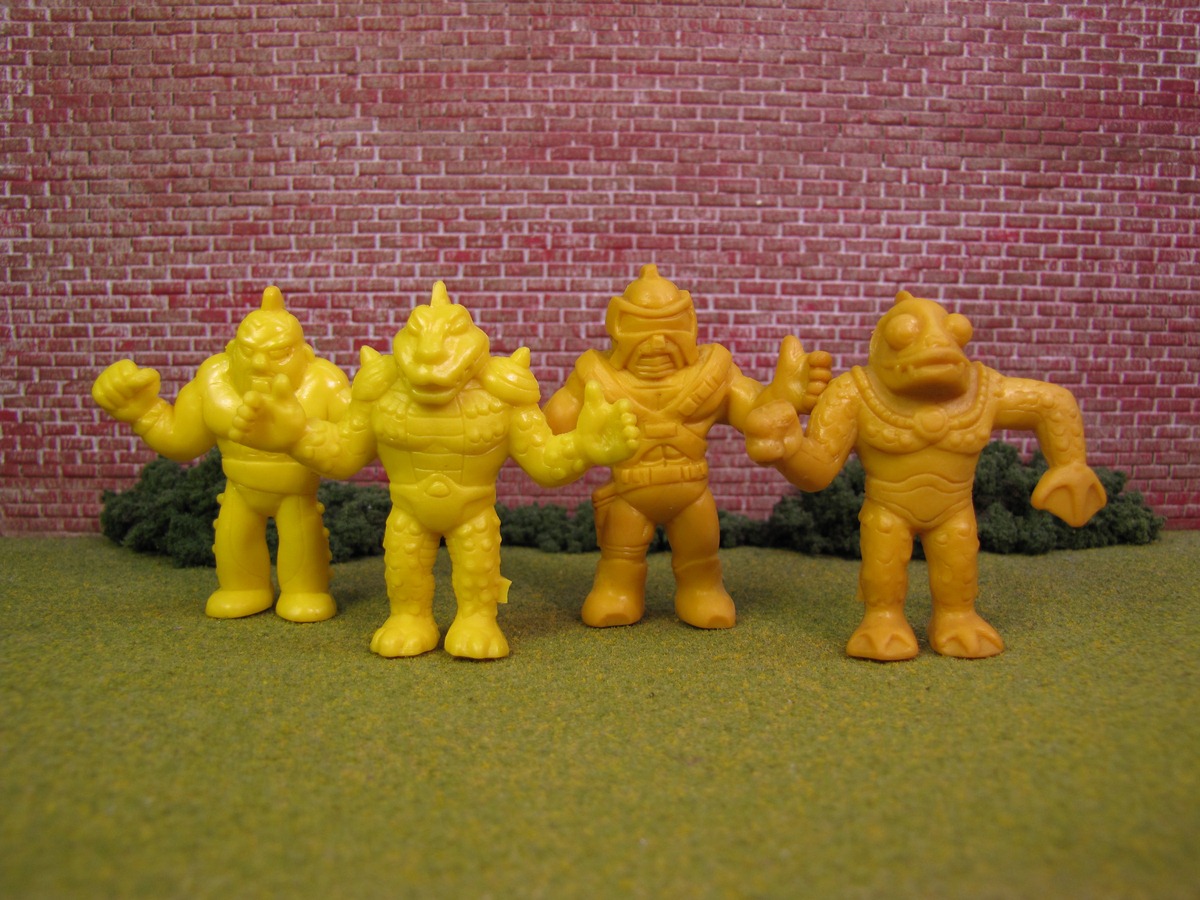
The launch of Mattel’s M.U.S.C.L.E. figures greatly boosted sales of Select’s Musclemanis figures, and the line increased the number of sculpts and the colors released. Over the course of its run, Musclemania expanded to twenty-four known sculpt designs released in as many as seven colors, with packaging proudly proclaiming “Over 100 Different Figures Available!” While that claim referred to the many possible figure-and-color combinations, rather than one hundred unique sculpt designs, it demonstrated Select’s understanding of the collector mentality. Blind assortments, multiple colors, and randomized packaging encouraged repeat purchases long before the term “Gotta Catch ‘em All” became a marketing staple.

Unlike Convertors, Musclemania remains one of Select’s more mysterious product lines. Documentation is scarce, surviving packaging is uncommon, and many details surrounding its development remain unknown. Acquiring a full collection is a gargantuan task. Collectors continue to debate the chronology of the Muscle Man and Musclemania branding, the number of production waves, and even the manufacturers responsible for later releases. Existing examples also exhibit noticeable differences in plastic composition and mold quality, suggesting that production shifted manufacturing to Korea during the life of the line. While many questions still remain unanswered, Musclemania stands as another example of Select Merchandise recognizing an emerging Japanese toy trend and bringing it to North America before the broader market had fully embraced it.
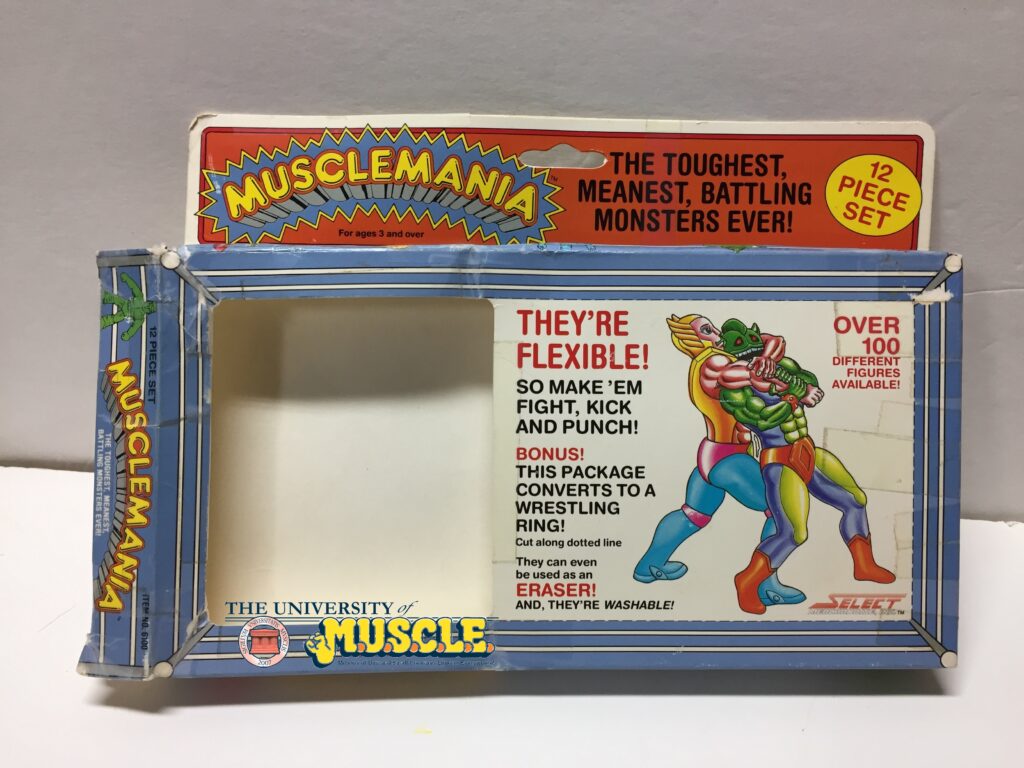
More information can be found at the fansite University of MUSCLE.
